New Zealand vs Australia: Which is Better for International Students in 2026?
A full comparison of tuition, cost of living, visas, safety, university rankings and acceptance rates.
The Noevo Team
1 jul 2026 · 8 min read

New Zealand vs Australia: Which is Better for International Students in 2026?
So, you're stuck between New Zealand and Australia. You're not alone — this is easily one of the most common "help me decide" messages we get. Both countries teach in English, both have universities you've actually heard of, both are safe, and both let you work after you graduate. On paper they look almost like twins.
They're not. Once you dig into what you'll actually pay, how the visa process feels in 2026, which universities take the most international students, and what life looks like day-to-day — the two countries pull apart pretty fast.
Here's the honest, no-fluff breakdown. Grab a coffee.
The Short Answer
- Go to Australia if you want a big-name university (top 100 in the world), bigger cities, more job openings, and higher starting salaries — and your budget can handle it.
- Go to New Zealand if you want to pay less, get through the visa process with fewer headaches, live somewhere smaller and calmer, and — if you're in the right field — get on a faster track to permanent residency.
If you only read one section, that's it. Keep going for the numbers.
How Much Does Tuition Actually Cost? (2026)
| Level | New Zealand (NZD/year) | Australia (AUD/year) |
|---|---|---|
| Undergraduate | NZ$22,000 – NZ$35,000 | A$30,000 – A$45,000 |
| Postgraduate (Masters) | NZ$26,000 – NZ$40,000 | A$32,000 – A$50,000 |
| MBA | NZ$45,000 – NZ$65,000 | A$60,000 – A$100,000 |
| Medicine / Dentistry | NZ$75,000+ | A$80,000 – A$100,000+ |
The pattern is simple: New Zealand is about 20–30% cheaper than Australia for the same degree. And the more specialised you go — MBA, medicine, dentistry — the bigger the gap gets.
What Living There Actually Costs
Tuition is only half the story. Rent and groceries are where budgets quietly explode.
New Zealand (monthly, in NZD)
- Rent (shared apartment in Auckland or Wellington): NZ$900 – NZ$1,400
- Groceries: NZ$400 – NZ$600
- Transport: NZ$120 – NZ$200
- Utilities + internet: NZ$150 – NZ$250
- Going out / eating out: NZ$200 – NZ$350
- Realistic total: NZ$1,800 – NZ$2,800 / month (roughly US$1,100 – US$1,700)
For the visa, Immigration NZ wants to see you have NZ$20,000 per year put aside for living costs.
Australia (monthly, in AUD)
- Rent (shared apartment in Sydney or Melbourne): A$1,300 – A$2,200
- Groceries: A$500 – A$700
- Transport: A$150 – A$220
- Utilities + internet: A$180 – A$280
- Going out / eating out: A$250 – A$450
- Realistic total: A$2,400 – A$3,800 / month (roughly US$1,600 – US$2,500)
Australia's Department of Home Affairs now wants to see A$29,710 per year in savings — one of the strictest thresholds anywhere in the world.
The takeaway: Studying in New Zealand saves the average student somewhere between US$6,000 and US$10,000 a year on living costs alone. That's a return flight home plus a holiday, every year.
The Student Visa in Plain English
New Zealand — Fee-Paying Student Visa
- How long it takes: usually 4–8 weeks
- What it costs: NZ$375
- Can you work? Yes — up to 20 hours a week during term, and full-time on holidays
- After you graduate: 1–3 years of post-study work rights (longer if you study outside Auckland)
- Getting residency: if your job is on the Green List (engineering, healthcare, tech, construction), there's a fast lane
Australia — Subclass 500
- How long it takes: 4–16 weeks (it's been slower since the 2024 caps)
- What it costs: A$2,000 — this jumped from A$710 in July 2024, and it's now the most expensive student visa in the world
- Can you work? 48 hours per fortnight during term, unlimited during breaks
- After you graduate (Subclass 485): 2–3 years for a Bachelors or Masters, plus an extra 1–2 years if you studied in a regional area
- New in 2024: the "Genuine Student" test replaced GTE — case officers are looking harder at whether you really intend to study
If you're just comparing the visa experience today: New Zealand is cheaper, faster, and much less politically messy.
Which Country Has the Bigger Headaches Right Now?
Both countries have tightened up on international students. But if we're being honest, Australia is going through a much rougher patch.
What's going on in Australia
- Enrolment caps: the federal government tried to cap new international commencements at around 270,000 for 2025. Parliament blocked the formal cap, but ministerial directives (Direction 107, then 111) are quietly slowing visas at lower-ranked universities.
- A brutal housing market: Sydney and Melbourne have vacancy rates of 1–2%. International students are getting blamed publicly, whether it's fair or not.
- Visa sticker shock: the fee almost tripled overnight in 2024.
- Rising refusals: applicants from India, Nepal and Pakistan are being refused at much higher rates outside the Group of Eight.
What's going on in New Zealand
- The job market is smaller, especially in Auckland outside tech and healthcare.
- Flights home are long and pricey if your family is in Europe or the Americas.
- Housing is tight in Auckland and Wellington — nowhere near Sydney levels, but still a hunt.
Bottom line for 2026: New Zealand is the more predictable ride. Australia is still the bigger academic prize, but expect friction along the way.
Who's Actually Letting More Students In?
- Australia hit a peak of around 717,000 international students in 2023. In 2025 that's dropped to roughly 630,000–650,000 as the caps and slower processing kicked in.
- New Zealand had around 73,000 international students in 2024 — that's up about 24% in a single year, and the government is openly aiming for 119,000 by 2034 under its International Education Going for Growth Plan.
In pure numbers, Australia takes roughly 9x more international students than New Zealand. But if you're looking at which door is opening wider right now, it's clearly New Zealand's.
University Rankings (QS World University Rankings 2025)
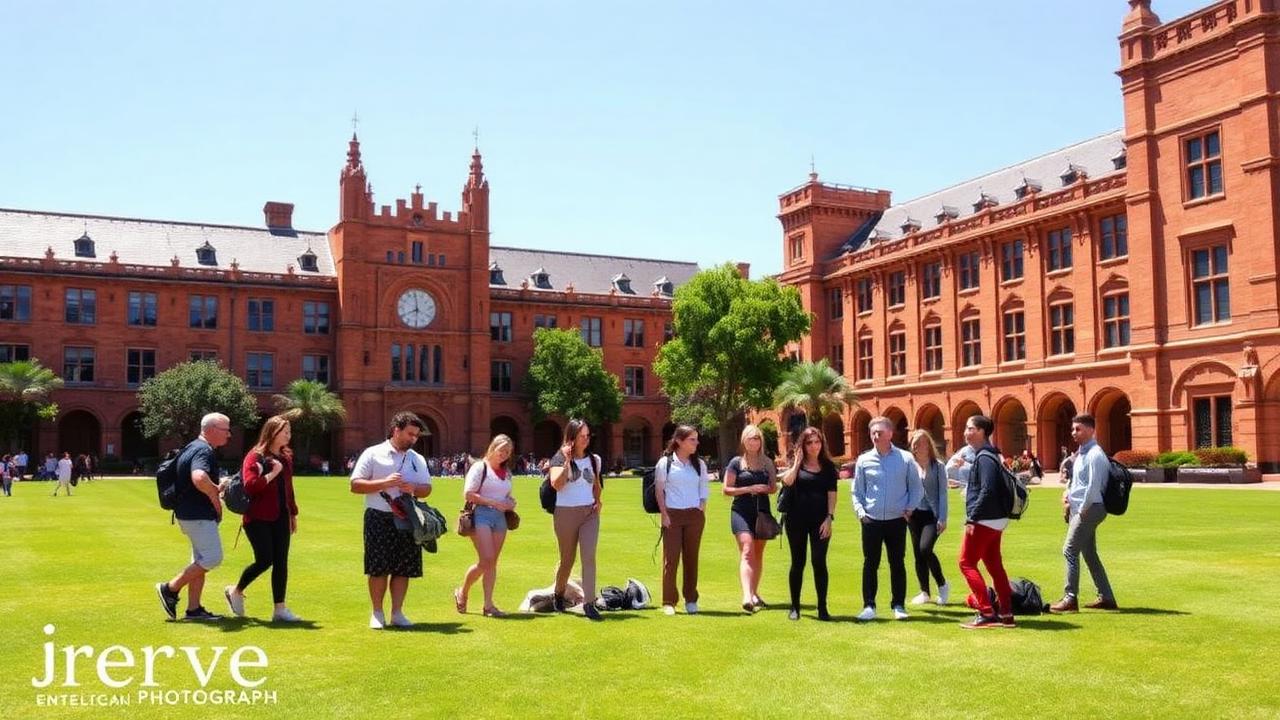
Australia's top universities
| Rank | University | City |
|---|---|---|
| 18 | University of Melbourne | Melbourne |
| 19 | University of Sydney | Sydney |
| 20 | University of New South Wales (UNSW) | Sydney |
| 34 | Australian National University (ANU) | Canberra |
| 40 | Monash University | Melbourne |
| 77 | University of Queensland | Brisbane |
| 82 | University of Western Australia | Perth |
| 89 | University of Adelaide | Adelaide |
Australia's Group of Eight (Go8) dominate the region — every one of them sits inside the global top 100.

New Zealand's top universities
| Rank | University | City |
|---|---|---|
| 65 | University of Auckland | Auckland |
| 197 | University of Otago | Dunedin |
| 214 | Victoria University of Wellington | Wellington |
| 233 | University of Canterbury | Christchurch |
| 244 | Massey University | Palmerston North |
| 267 | University of Waikato | Hamilton |
| 373 | Lincoln University | Christchurch |
| 412 | Auckland University of Technology (AUT) | Auckland |
On rankings alone, Australia wins by a mile — 8 universities in the QS top 100 vs 1 for New Zealand.
How Hard Is It to Get In? (And Where Do International Students Actually Go?)
Australia — universities with the most international students
1. Monash University — over 34,000 international students 2. University of Sydney — over 31,000 3. University of Melbourne — over 28,000 4. UNSW Sydney — over 27,000 5. RMIT University — over 26,000 6. University of Technology Sydney (UTS) — over 20,000
Here's a small secret: Australian universities are not "competitive" the way US or UK schools are. A decent GPA and IELTS 6.5 will usually get you an offer at a non-Go8. Even the Go8 admit 40–70% of international applicants depending on the program.
New Zealand — universities with the most international students
1. University of Auckland — over 8,000 international students 2. AUT (Auckland University of Technology) — over 5,500 3. Massey University — over 4,500 4. University of Otago — over 3,000 5. Victoria University of Wellington — over 3,000
Acceptance rates in New Zealand tend to be even more generous — around 60–80% if you meet the academic bar.
Working After You Graduate (and Staying)
- Australia gives you 2–4 years of post-study work. The Skilled Migration list is broad but the points race for permanent residency is competitive and can drag on for years.
- New Zealand gives you 1–3 years post-study work. The magic word here is Green List — if you're a nurse, teacher, engineer or tech worker, you're looking at a direct or fast-tracked residency pathway.
Simple rule of thumb: if residency is the endgame and your field is on the Green List, New Zealand is the smoother bet. If you want a bigger salary and job market, Australia wins.
Safety and Everyday Life
Both countries sit in the global top 10 for safety and quality of life (Global Peace Index). Bad things happen everywhere, but the overall picture is genuinely good in both.
- New Zealand: small cities (Auckland is 1.7M), outdoor lifestyle baked into daily life, easier to make friends because everything is smaller.
- Australia: big-city energy, way more diverse international communities, better food scene, better nightlife, more of everything.
So — Which One Should You Pick?
- You want a top-100 global ranking on your CV
- You want the biggest possible job market and the highest salaries
- Your budget can handle A$60k+ per year all-in
- Your budget is tighter (NZ$45–55k/year all-in is realistic)
- You want the smoothest possible visa experience in 2026
- You're aiming for residency and your field is on the Green List
- You'd rather live somewhere smaller and calmer
There's no "wrong" answer here — just a right one for your budget, your goals, and how much friction you're willing to deal with.
Frequently Asked Questions
Is New Zealand cheaper than Australia for students?
Yes, meaningfully. Tuition runs 20–30% lower and living costs are roughly 25–35% lower depending on the city. A student in Auckland typically spends US$6,000–10,000 less per year than one in Sydney or Melbourne.
Is it easier to get a student visa for New Zealand or Australia in 2026?
New Zealand, by a wide margin. The visa fee is NZ$375 vs Australia's A$2,000, processing is faster, and there are no enrolment caps. Australia's Direction 111 is still slowing visas at a lot of universities.
Which country has better universities?
Australia, if you're going purely on rankings. Eight of its universities sit in the QS global top 100; only the University of Auckland does that for New Zealand. That said, the top NZ universities are still well-respected globally — they just don't hit the same ranking numbers.
Can I get permanent residency after studying in Australia or New Zealand?
Both offer post-study work visas. New Zealand's Green List gives you a faster, more direct residency route in specific fields — healthcare, engineering, construction, tech. Australia's points-based skilled migration covers more careers but is more competitive to actually win.
Which country is safer for international students?
Both are among the safest countries on Earth. New Zealand ranks a touch higher on the Global Peace Index; Australia sees more urban crime, but mostly because its cities are much bigger.
How much money do I need to show for a student visa?
New Zealand asks for NZ$20,000 per year in living funds. Australia asks for A$29,710 per year (as of 2024) — one of the highest requirements anywhere in the world.
Frequently asked questions
Is New Zealand cheaper than Australia for students?
+
Yes. Tuition is 20-30% lower and living costs are roughly 25-35% lower depending on the city.
Is it easier to get a student visa for New Zealand or Australia in 2026?
+
New Zealand. Its student visa fee is NZ$375 vs Australia's A$2,000, processing times are faster, and there are no enrolment caps.
Which country has better universities?
+
Australia. Eight Australian universities sit in the QS global top 100; only the University of Auckland does from New Zealand.
Can I get permanent residency after studying in Australia or New Zealand?
+
Both offer post-study work visas. New Zealand's Green List provides a faster residency path in specific fields; Australia's points-based skilled migration is broader but more competitive.
How much money do I need to show for a student visa?
+
New Zealand requires NZ$20,000 per year in living funds. Australia requires A$29,710 per year.
READY WHEN YOU ARE
Ready to find your path?
Tell Rio your dream and get personalised university matches in minutes — free.
Talk to Rio →